
Wondering if a cat is in pain can be an emotion time, especially as cats are often the masters of masking their discomfort. As responsible and compassionate cat owners, it is important we learn how to tell if a cat is in pain. In this post, we are going to tell you how.
Cats, by nature, have evolved to hide pain as a survival mechanism. However, attentive observation can help unveil their distress. This guide aims to equip you with the tools to recognise signs of pain in a cat and take the necessary steps to ensure their well-being.
Common signs of pain in a cat – a quick run down:
- Hiding away and not interacting as normal
- Reduced appetite
- Sleeping more than usual
- Sleeping in unusual places
- Moving differently (limping, crouched, etc)
- Grooming less
- Changes in urine or defecation
- Temperament changes
- Changes in facial expression
- Not wanting to be stroked or groomed

How to tell if a cat is in pain – A comprehensive guide
Understanding Cat Behaviour
To notice pain in your cat, it’s essential to know what is normal behaviour for your cat or the cat you suspect may be in pain.
Cats communicate a wealth of information through their body language. As a cat owner, you’re familiar with their daily routines and habits. Any deviation from their usual behaviour could be a potential indicator of pain or discomfort.
Observe their posture, gait (the way they walk), and overall demeanour. Signs of discomfort in a cat may include hunching, reluctance to move, or an increased need for rest or sleep. Also, keep an eye out for behavioural changes such as increased aggression, irritability, or avoidance of interactions.
If there are noticeable changes in their behaviour, especially for a prolonged amount of time ( over one day), this could be a good reason to suspect your cat is in pain and not feeling like themselves.
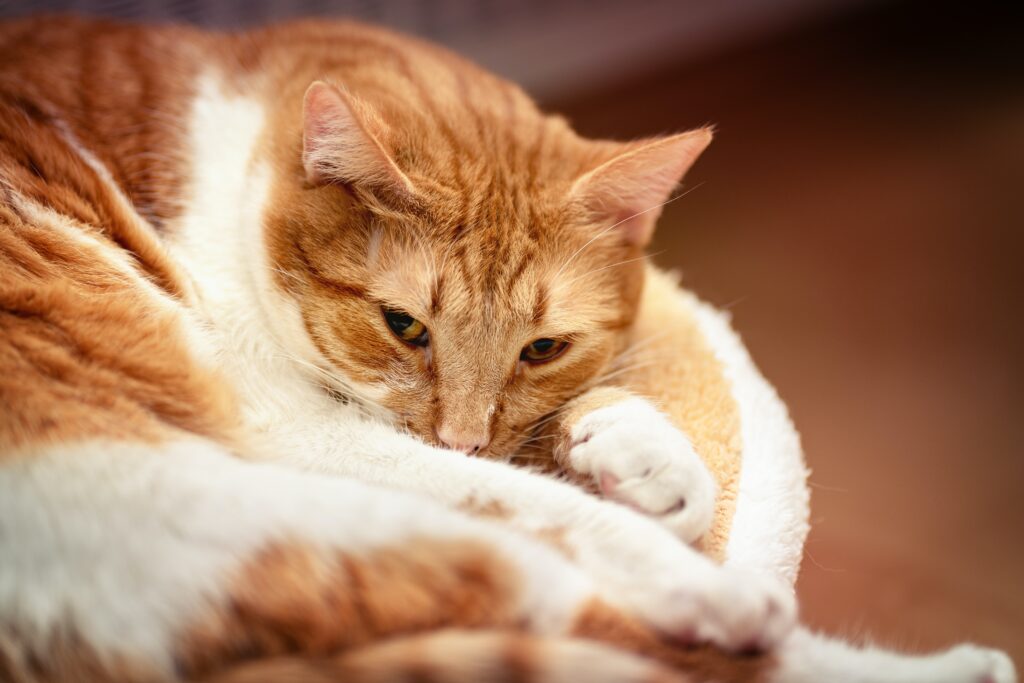
Physical Signs of Pain in cats
Cats often communicate pain through physical cues.
Grooming is a fundamental aspect of a cat’s routine, but alterations in grooming behaviour can point to signs of pain. A cat experiencing pain may either groom excessively in an attempt to self-soothe or neglect grooming due to their discomfort. Pay attention to changes in their coat texture, as unkempt or dull fur might indicate underlying pain.
It is also a good idea to monitor your cat’s vocalisations and purring patterns. While some cats become more vocal when in pain, others may become unusually quiet – again, it is important to know what is normal for that particular cat. Interestingly, cats do not only purr when they are happy – some cats will purr when in pain.
How to tell if a cat is purring in pain
- The purr maybe in a different pitch to their normal purr
- It maybe a faster purr than normal
- They are purring in combination with any of the cats signs of pain listed above.
Observe any shifts from their typical vocal behaviour, such as increased meowing or growling. Additionally, changes in weight and appetite can be significant indicators of pain. Sudden weight loss or gain might suggest an underlying issue that requires attention.
Observing Eating and Drinking Habits
A cat’s eating and drinking habits can offer valuable information into how they are feeling. Changes in appetite can be a red flag, so take note if your cat suddenly loses interest in their food or shows an unusually ravenous appetite.
Changes in drinking patterns are also important to monitor. An increase or decrease in water consumption might point to kidney issues, diabetes, or other health concerns.
If your cat is not to eat or drink, it’s imperative they visit to Vet as soon as possible to get this treated and avoid further complications.
Litter Box Changes
Litter box behaviour is a window into your cat’s health. Cats are meticulous creatures, and any alterations in their litter box habits should raise concern. If your cat starts using the litter box more frequently than usual, it could indicate a urinary tract issue. On the other hand, avoiding the litter box altogether might suggest pain or discomfort associated with urination or defecation. Straining or crying during elimination could point to potential problems, including constipation or urinary blockages. All of these conditions would indicate signs of pain in a cat.
Any male cats experiencing any of the urinary changes noted above is considered a medical emergency. Male cats can suffer from urinary blockages, which can quickly turn life threatening if not treated promptly.
Mobility and Activity Levels
Cats are renowned for their agility and playfulness, making changes in mobility and activity levels particularly telling. If your once-vibrant cat becomes lethargic, seems disinterested in play, or demonstrates difficulty jumping, climbing, or running, it could be way to tell if your cat is experiencing pain.
Limps or favouring a specific limb may indicate pain stemming from joint issues, injury, or even osteoarthritis.
Pay close attention to any reluctance to engage in physical activities that were once routine.
Interaction and Social Behaviour
Cats’ social behaviour can reveal a lot about their emotional and physical state. A cat that’s typically sociable but suddenly starts avoiding human contact might be experiencing pain. Increased aggression or irritability could be their way of protecting themselves from potential discomfort.
Changes in their tolerance for stroking, handling, or being picked up should also be taken seriously and not ignored, as they might be trying to communicate their discomfort.
Eyes, Ears, and Facial Expressions
A cat’s eyes, ears, and facial expressions can provide a wealth of information about their well-being. Keep a watchful eye for any squinting or excessive blinking, which could indicate eye pain or irritation. Changes in ear position, sensitivity to touch, or frequent head shaking might suggest ear discomfort or infection.
The expression on your cat’s face, including tense muscles or pained expressions, can also be revealing. The International Society of Feline Medicine (ISFM) have done extensive research on the relation between facial expressions and pain in cats, which can be seen briefly below.

Coat and Skin Condition
As briefly touched on already, a cat’s coat and skin health are closely linked to their overall well-being. A shiny, well-groomed coat is a sign of a healthy cat. Conversely, a dull or flaky coat, excessive shedding, or signs of over-grooming in specific areas might indicate stress or discomfort.
Redness, swelling, or the presence of lesions on the skin should prompt the need to see a Vet.
Breathing and Respiration
Any changes in a cat’s breathing patterns should not be ignored. Rapid or laboured breathing, persistent coughing, or wheezing could signal respiratory issues or pain in a cat. It is not normal for cats to breathe with their mouth open (like a dog panting).
Also, if you notice any unusual sounds during breathing, such as wheezing or rasping, it’s important to consult a veterinarian promptly. It may be useful to quickly film the breathing on your phone, incase this changes by the time of your appointment.

Seeking Veterinary Care For A Cat In Pain
While this guide provides valuable insights into recognising pain in cats, it’s important to remember that only a qualified Veterinarian can provide an accurate diagnosis.
If you suspect your cat is in pain, seeking professional evaluation is essential. Your Veterinarian has the expertise to perform a thorough examination and may recommend further tests if necessary, such as an X-ray or blood test.
When visiting the vet, be sure to communicate your observations in detail, as this information is crucial for an accurate diagnosis and treatment plan. Remember, you know your cat and their normal behaviour best – you will be a valuable source of information.
Recognising pain in your cat is both a responsibility and an act of love. By understanding and deciphering their subtle cues, you play a vital role in ensuring their well-being and quality of life.
Cats have a remarkable ability to hide their discomfort, but your attentive care can make a world of difference. Your commitment to understanding and addressing your cat’s pain is a testament to the strong and loving relationship you share.
We hope you now have a good understanding on how to tell if a cat is in pain, but remember, if you are unsure or have concerns, always consult your Veterinary Surgeon.